

HIDRADENITIS SUPPURATIVA
Navigating life with HS
What is HS?
Hidradenitis suppurativa or HS, is a chronic inflammatory skin condition that causes painful lumps, abscesses, and scarring.
When hair follicles become blocked, inflammation can develop and lead to deep, painful nodules that eventually rupture and drain fluid. Patients with a higher BMI may experience more severe disease.
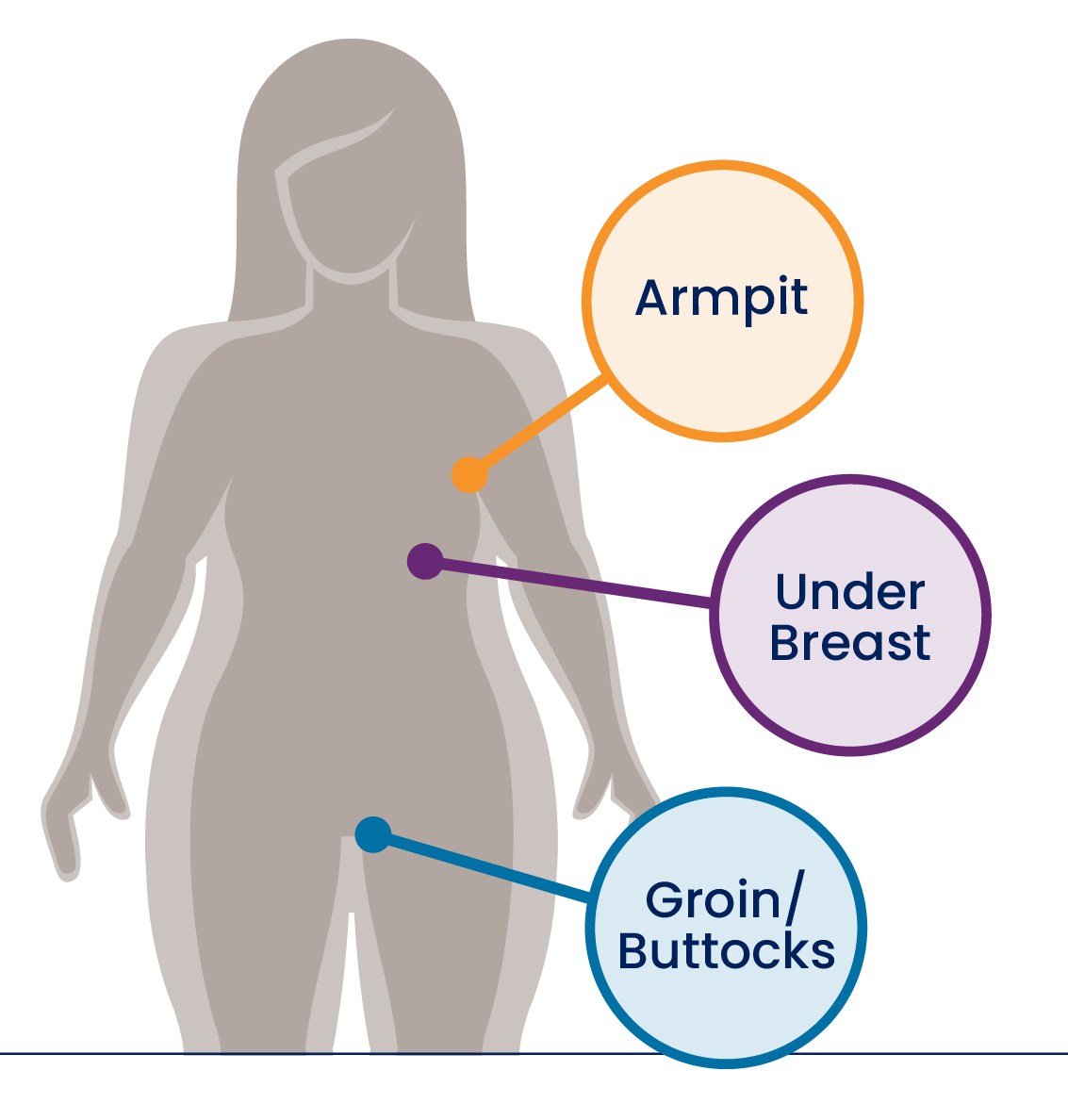
HS is most common in areas where skin rubs together such as in the armpit or groin and under the breasts.
SYMPTOMS
Nodules – deep, painful inflammatory lumps under the skin
Abscesses – inflamed lesions that can fill with pus
Draining tunnels that connect nodules and abscesses that can lead to a discharge and scarring
Over one million people in the U.S. live with moderate-to-severe HS which affects three times more women than men.
Why are new treatments needed?
Only 3 in 10 people achieve meaningful symptom relief and clinical improvement with current treatment options.*

Current biologics that only target a single pathway may be less effective for some people, as HS is complex disease involving multiple pathways.
Today, in the absence of effective treatment many patients experience delayed diagnosis and only 350,000 currently seek treatment, with many people struggling to manage their symptoms for years.
The visible nature of the condition and its impact on intimate areas can profoundly affect self-esteem, relationships, and overall mental health, underscoring the critical need for effective new options.
To find out more about our Phase 2a clinical trial visit ClinicalTrials.gov (NCT 07384975).
*Clinical improvement defined as the Hidradenitis Suppurativa Clinical Response 75 (HiSCR75) which included a 75% or more reduction in inflammatory nodules or abscesses and no increase in abscesses or draining tunnels.