

OUR SCIENCE
Realizing the Potential of Synergistic Immune Modulation
Charting a new course to better treatment options
Auto-inflammatory conditions are challenging health issues to manage. Beyond the physical symptoms of inflammation, these conditions can significantly diminish quality of life, contributing to depression, anxiety, and social isolation. For many people, treatment options remain frustratingly limited.
Traditional therapies typically focus on blocking a single inflammatory pathway, but targeting two pathways simultaneously may hold the key to effectively treating even complex auto-inflammatory conditions.
At Navigator we are advancing novel bispecific antibody treatments that hit two different drivers of inflammation. By unlocking the synergy of dual inhibition, we aim to deliver effective and durable therapy to help people with inflammatory conditions thrive.
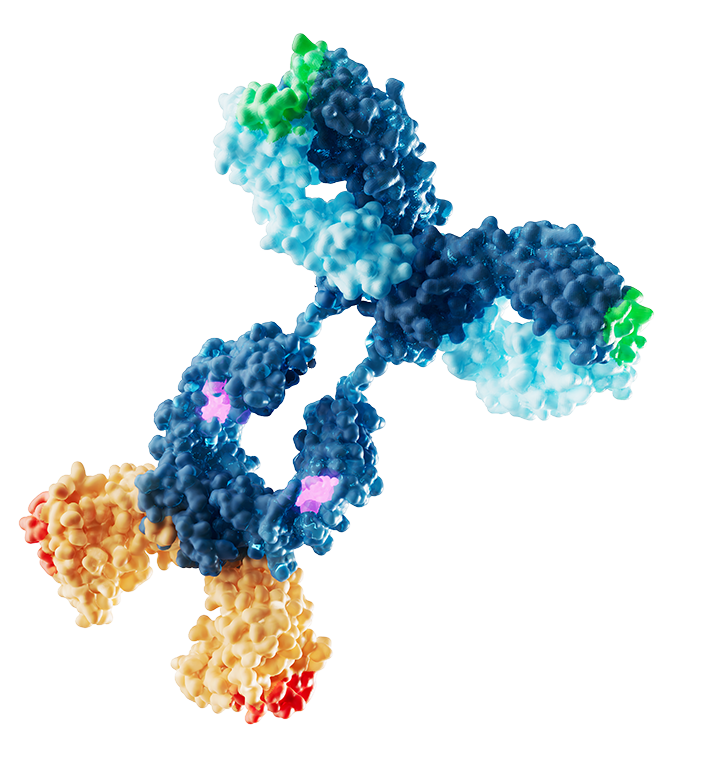
Navigator’s lead program is a best-in-class OX40L and TNFα bispecific antibody therapeutic
By targeting both TNFα and OX40L, two known drivers in inflammation, our program has the potential to rapidly reduce inflammation and enable an immune reset for longer-lasting impact.
Inhibiting TNFα alone has been a long-standing strategy to reduce inflammation. Current TNFα inhibitor treatments have helped many people, but they don't work for everyone, and can lose efficacy over time. By blocking both TNFα and OX40L, NAV-240 and NAV-242 are designed to improve upon the efficacy of monotherapy alone.
Navigator’s OX40L and TNFα bispecific antibodies target multiple inflammatory conditions
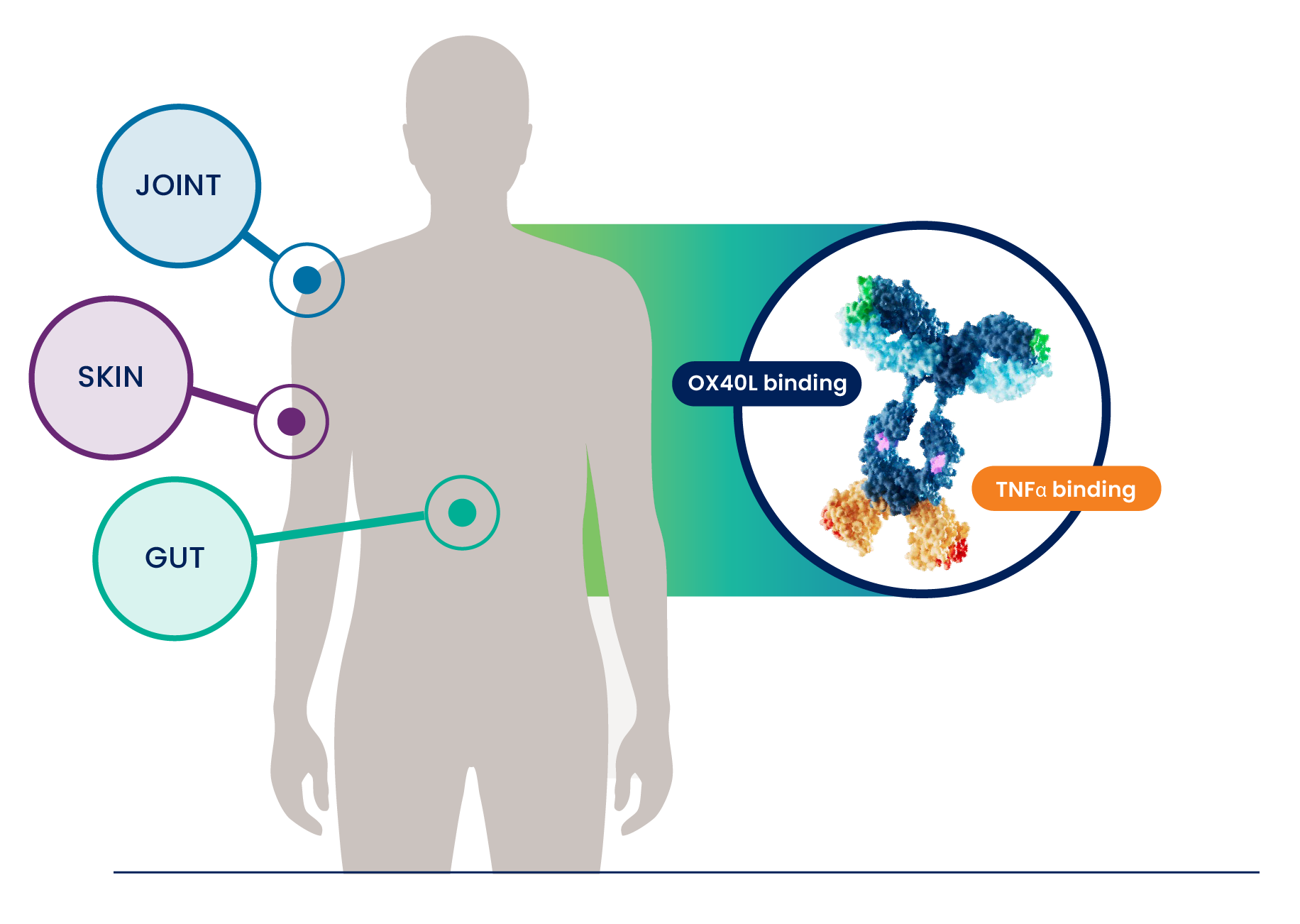
A bispecific antibody targeting both OX40L and TNFα brings benefit to patients in three ways;
Synergistic
Modulating both OX40L and TNFα inflammatory pathways at the same time has potential to drive superior effects over either alone. Taking this beyond co-formulation to a single bi-specific antibody (like NAV-240 or NAV-242) has the potential to drive down the inflammatory response even further.
Targeted
Bispecific antibodies, like NAV-240 or NAV-242, enable the anti-OX40L to help direct the anti-TNFα effect to the sites of inflammation, increasing its opportunity to act in those locations.
Durable
Anti-OX40L antibodies are known to provide durable efficacy, even after treatment, sustaining their potential benefit for patients by enabling an immune reset to support long-lasting impact.
Synergistic effect of bispecific antibodies drives effective cytokine suppression
THE POTENTIAL FOR SYNERGISTIC EFFICACY
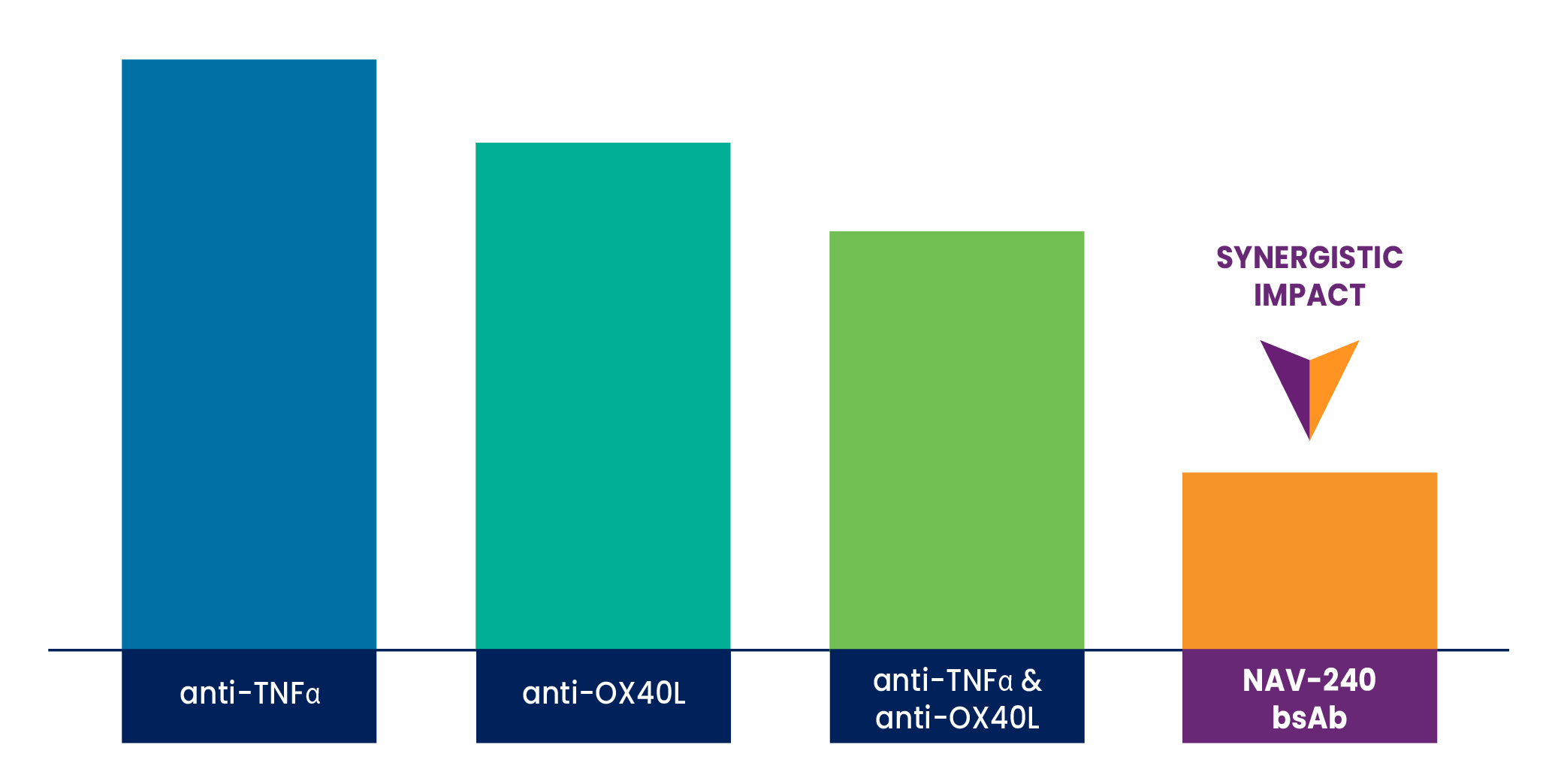
Illustration of inflammatory cytokine based on in vivo and in vitro Navigator internal data.
This dual-targeting approach may be especially helpful in addressing complex autoimmune diseases like hidradenitis suppurativa (HS), which has limited treatment options. Navigator is currently assessing the efficacy and safety of NAV-240 in people living with HS.